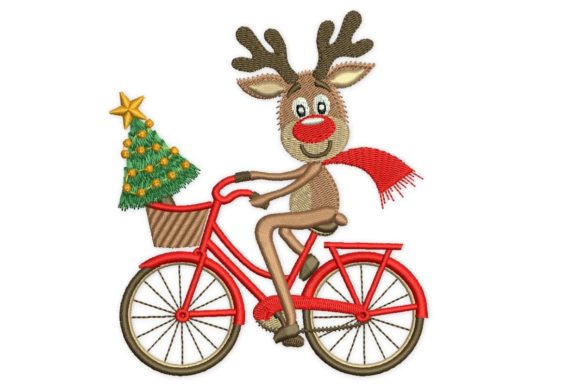
Christmas Deer on Bike: A Craft Fair Best-Seller Review
As an embroidery designer preparing for the upcoming holiday market season, my table strategy is everything. I am not just stitching; I am curating a collection that needs to stop scrolling thumbs online and halt walking feet in person. This weekend, I am evaluating a specific machine embroidery design titled Christmas Deer on Bike. The premise is simple yet charming: a festive deer riding a bicycle. Based on the product description, which promises a high-quality, fun, and easy-to-stitch result that looks elegant on any fabric, I need to determine if this asset deserves a prime spot on my booth display.
First Impressions and Market Mood
When I first pulled up the preview of Christmas Deer on Bike, the immediate vibe was a perfect blend of whimsical and rustic. It does not scream "luxury minimalism," nor does it feel overly childish. Instead, it hits that sweet spot of farmhouse festive that dominates current handmade trends. For a craft fair seller, this mood is gold. It appeals to the buyer looking for something unique for their kitchen or a gift for the cyclist in their life who loves the holidays. The description claims it will look "gorgeous" on any fabric, which is a bold promise. In my experience, designs with clear outlines and balanced spacing tend to fulfill this promise best, whereas overly complex designs can get lost on textured materials.
Product Versatility and Placement
The true test of any digital embroidery file is its adaptability across different products. I imagined setting up my booth with a variety of items to see where this design shines brightest.
- Tote Bags and Market Bags: This is likely the strongest contender. A tote bag design needs to be readable from three feet away. If the deer and bike have sufficient scale, this becomes an instant grab-and-go item for shoppers carrying their other purchases.
- Aprons and Tea Towels: For apron embroidery and tea towel embroidery, placement is key. Centered on a bib apron or anchored in the corner of a flour sack towel, this design adds a touch of personality without overwhelming the utility of the item.
- Patches and Pouches: As an embroidered patch, this design could be ironed onto denim jackets or canvas backpacks. Small fabric pouches featuring this motif make excellent stocking stuffers, provided the details do not become muddy at a smaller scale.
- Caps and Pillow Covers: Here is where caution is needed. Curved cap surfaces can distort wide designs. If the bike is too wide, it might wrap awkwardly around the front panel. Pillow covers offer a great canvas, but the fabric texture of linen versus cotton will change how the stitches settle.
Production Practicality for Small Shops
For an Etsy seller or boutique maker, time is money. The description notes that this is "easy to stitch," which suggests optimized stitch density and logical color changes. When producing batch runs for a weekend fair, I need designs that do not require constant thread trimming or excessive stabilizer manipulation. If Christmas Deer on Bike truly delivers on being "fun and easy," it allows me to run multiple hoops simultaneously, increasing my inventory of finished product before the doors even open.
Photography is another critical factor. In the digital realm, a printable mockup or a photo of the actual stitched item must pop. Designs with good contrast between the thread colors and the background fabric photograph best. A dark green deer on a cream tote, or a red bike on a navy pillow, creates the visual hook needed for online listings. If the design relies on subtle shade-on-shade stitching, it may look elegant in person but disappear in a thumbnail image.
Critical Considerations and Careful Use
While the potential is high, a professional review must address the pitfalls. No design is universally perfect on every medium without testing.
- Dense Stitch Areas: If the deer's antlers or the bike wheels are heavily saturated with stitches, they may cause puckering on lighter fabrics like tea towels. Checking the density map in your software is essential.
- Tiny Details: Small elements, such as the bike chain or the deer's eyes, might lose clarity if the design is resized too small. Always respect the minimum recommended size.
- Fabric Texture: The claim that it works on "any fabric" should be taken with a grain of salt. Highly textured waffle weaves or looped terry cloth can swallow small details. Smooth cottons and linens are safer bets for this specific motif.
- Curved Surfaces: As mentioned regarding caps, ensure the hoop size and design width fit the available stitching area without distortion.
Enhancing Brand and Buyer Engagement
Ultimately, Christmas Deer on Bike is more than just threads; it is a tool for brand building. Using consistent design assets across your booth creates a cohesive look. If you pair this design with complementary fonts or color palettes in your signage, it strengthens your brand identity. Customers are drawn to booths that feel curated rather than cluttered. This design offers a narrative—it tells a story of holiday joy and movement—which increases buyer engagement. People stop to smile at a deer on a bike; that smile often turns into a sale.
For those considering this for commercial embroidery ventures, the repeatability factor is crucial. Can you stitch fifty of these in a day without losing quality? If the answer is yes, this design becomes a workhorse for your small shop product line.
Final Designer Notes and Checklist
Before committing to a full production run, I recommend the following steps to ensure success:
- Test on Scrap: Always stitch a sample on the exact fabric you intend to sell. What looks good on polyester might behave differently on organic cotton.
- Check Thread Contrast: Ensure your chosen thread palette provides enough definition between the deer, the bike, and the background.
- Review Spacing: Look for jump stitches that might need trimming, especially in intricate areas.
- Confirm Hoop Size: Verify that your machine's hoop accommodates the design dimensions without needing a re-hoop mid-stitch.
- Select the Right Stabilizer: Match your stabilizer to the fabric weight. Cut-away for stretchy knits, tear-away for stable wovens.
- Create a Real Mockup: Do not rely solely on digital simulations. A physical sample on a tote or apron is your best sales tool.
- Verify Licensing: Crucially, confirm the commercial licensing terms. The description mentions it comes with "mu" (likely multi-formats or multiple sizes), but you must explicitly check if you are allowed to sell the finished product or if there are restrictions on the number of items.
In conclusion, Christmas Deer on Bike appears to be a strong candidate for the holiday market. Its blend of humor and tradition fits the current handmade aesthetic perfectly. By paying attention to fabric choices, stitch density, and proper testing, this embroidery file can transform simple blanks into high-value craft fair products that fly off the table. Remember, the devil—and the deer—is in the details.